More than Word(le)s
Finding Poetry (?) On the Grid

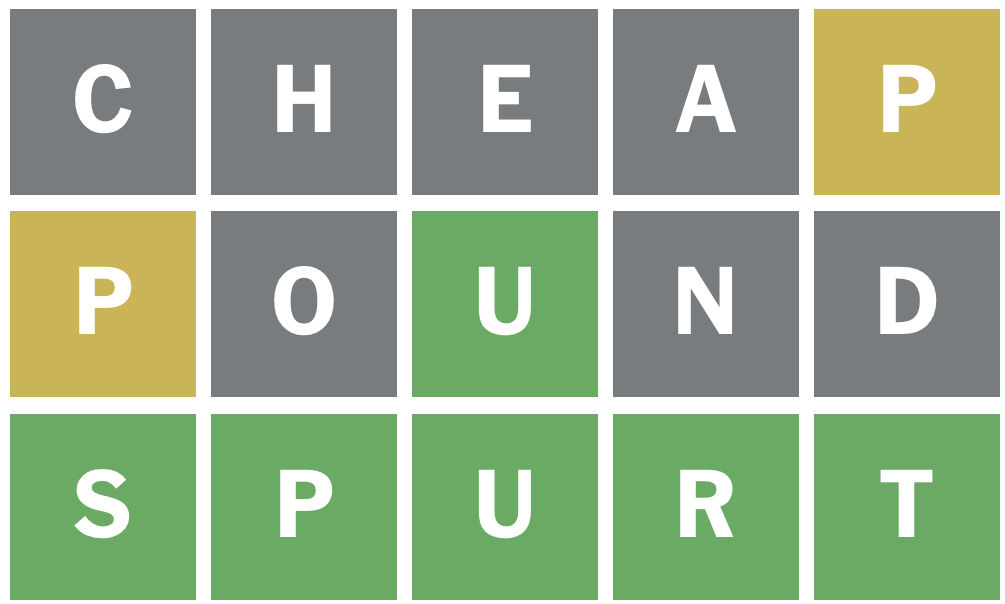
Wordle first came into view for me as a very clever piece of game design. The premise is immediately digestible and it generates an inviting sense of competition. That competitive aspect scales up and down, whether if it’s just one person trying to get better and better or bigger communities sharing the experience. For years, I watched people post their grids on social media. I didn’t start playing Wordle until a few months ago, mostly because other people in my family were deep into it.
Despite playing, writing about, and writing for games for most of my life, I’ve tended not to think I’m very good at many of them. I kinda think I’m good at Wordle. Running out of guesses rarly happens, my games finish in four guesses pretty consistently, and I’ve even logged a few instances where I do it in two guesses.
For me, there’s a meta-layer to Wordle that informs my strategy. Years of playing word games where letters are assigned numerical value have colored how I view certain vowels and consonants. “J” is worth ~10 points in Scrabble/Words With Friends/whatever because it’s an outlier that’s not used as frequently as, say, “C”. That means I don’t go to “J” or “X” or “V” unless the other already-found letters push me to there. Thinking about how Wordle needs to play to a large audience also shapes my play experience. My instincts tell me that common parlance words are more likely to be answers than more rarefied ones. Mind you, I’m not plugged into whatever Wordle discourse or fan communities that might exist and have no evidence if that assertion is true. But that’s okay; it’s my head canon.
There’s another part of my meta-engagement with Wordle that’s been unexpected: I find myself making emergent poetry out of the words in the grid. Long minutes staring at the gid and cursing at myself for not finding the word that I know is there opened a portal and then…
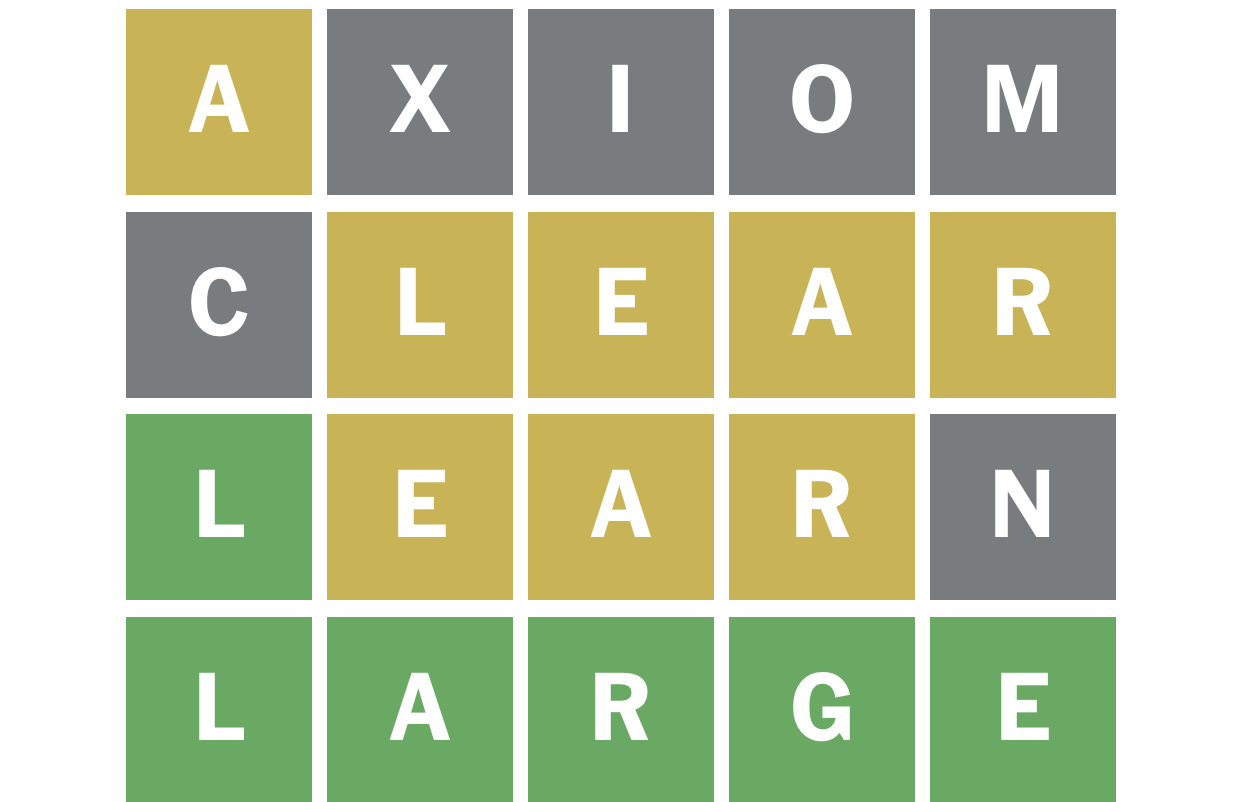
“Axiom, clear, learn, large” becomes a mini-poem about how a pithy piece of wisdom can open up your brain to big ideas.
Here’s an irony, though: the better you are at Wordle, the more scant your poetry is going to be. Those 6-guess nailbiters that I’d rather forget about in favor of the 2-guess triumphs? They throb with lyricism. Depending on the specific words in the 2-guess triumphs, I’m lucky if I can make any kind of thought picture with them.

The wrinkle in my brain that spat out this magical remixism thinking didn’t fire right after my first game of Wordle. No, this idea had to percolate a bit. My brain needed to shift gears and stop seeing the letters in the grid as puzzle pieces. The whole point of Wordle is to pull words out of the ether and there’s poetry wherever there’s words.
I can attribute this at least in part to David Bowie. The Thin White Duke was a big part of my sonic landscape growing up. I wasn’t spending my money on his LPs when I grew up but his music almost always resonated with me when I heard it on the radio. (Gen X sidenote: it still blows my mind how much airplay Bowie got on black radio in the 1980s.) Hearing anecdotes about Bowie is how I first learned about the cut-up technique of writing. I never did Magnetic Poetry on my fridge but I’d fiddle with the little letter-laden rectangles if ther were at a friend’s house. Way back in college, I told a woman I was dating that ‘words are my friends’. (Ya boy’s always been this way…) This emergent Wordle poetry impulse feels like my brain getting to satisfy some curiosity about that cut-up modality. Last year, I played Ransom Notes for the first time while on vacation with friends. Cut-up enthusiasm intensified!
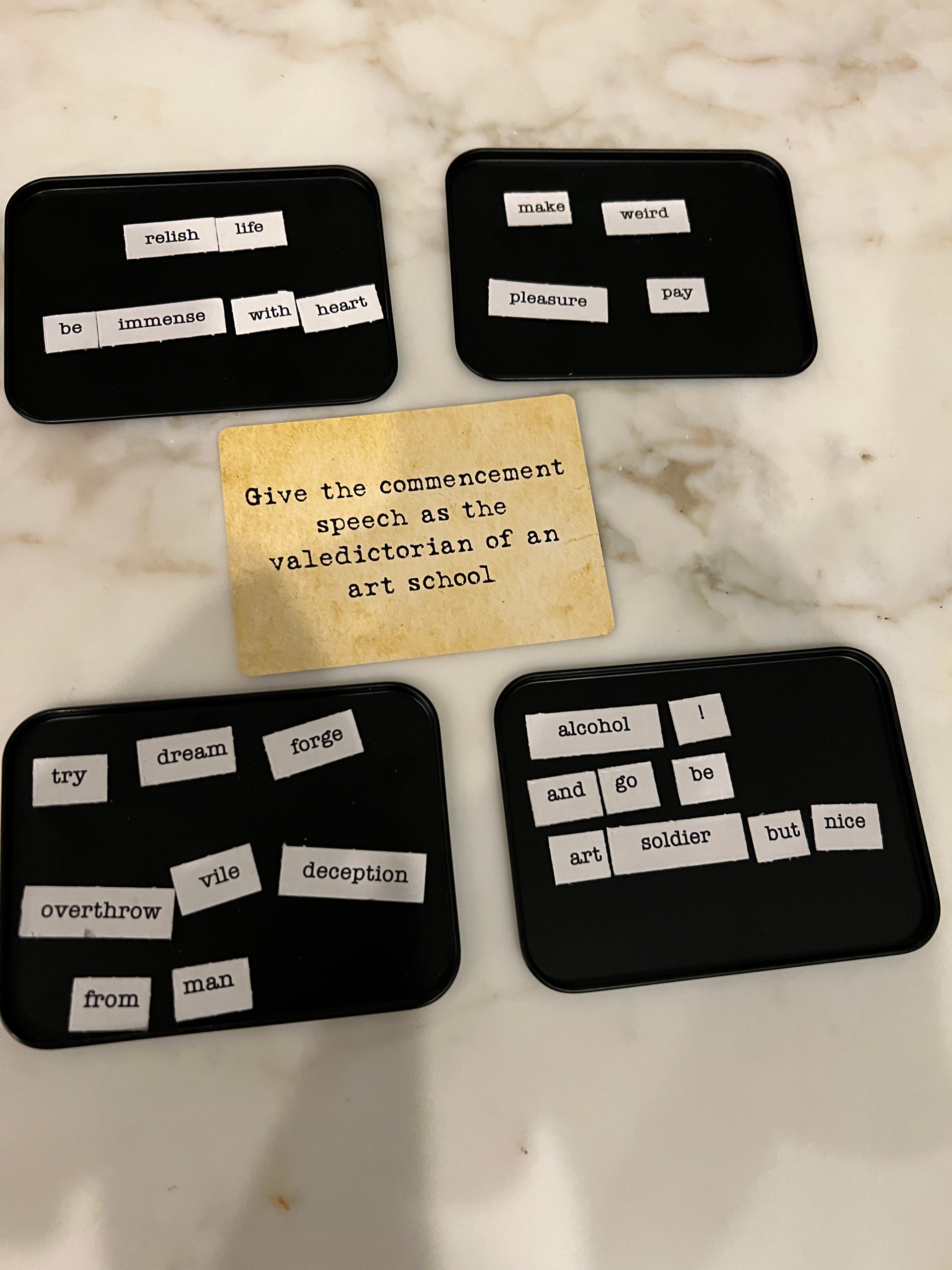
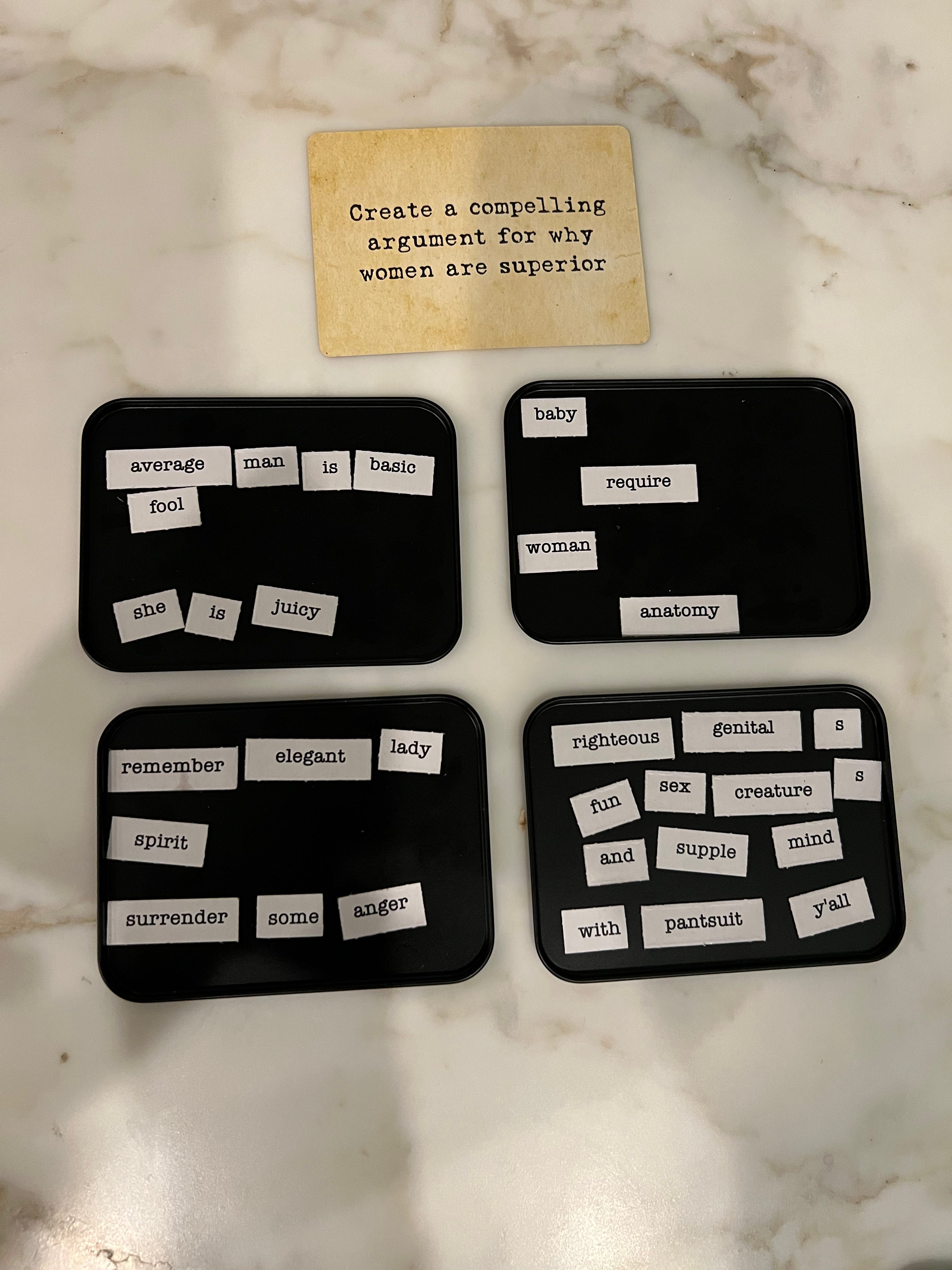
Sometimes, the words in the grid are less of a poem and more of a story prompt.
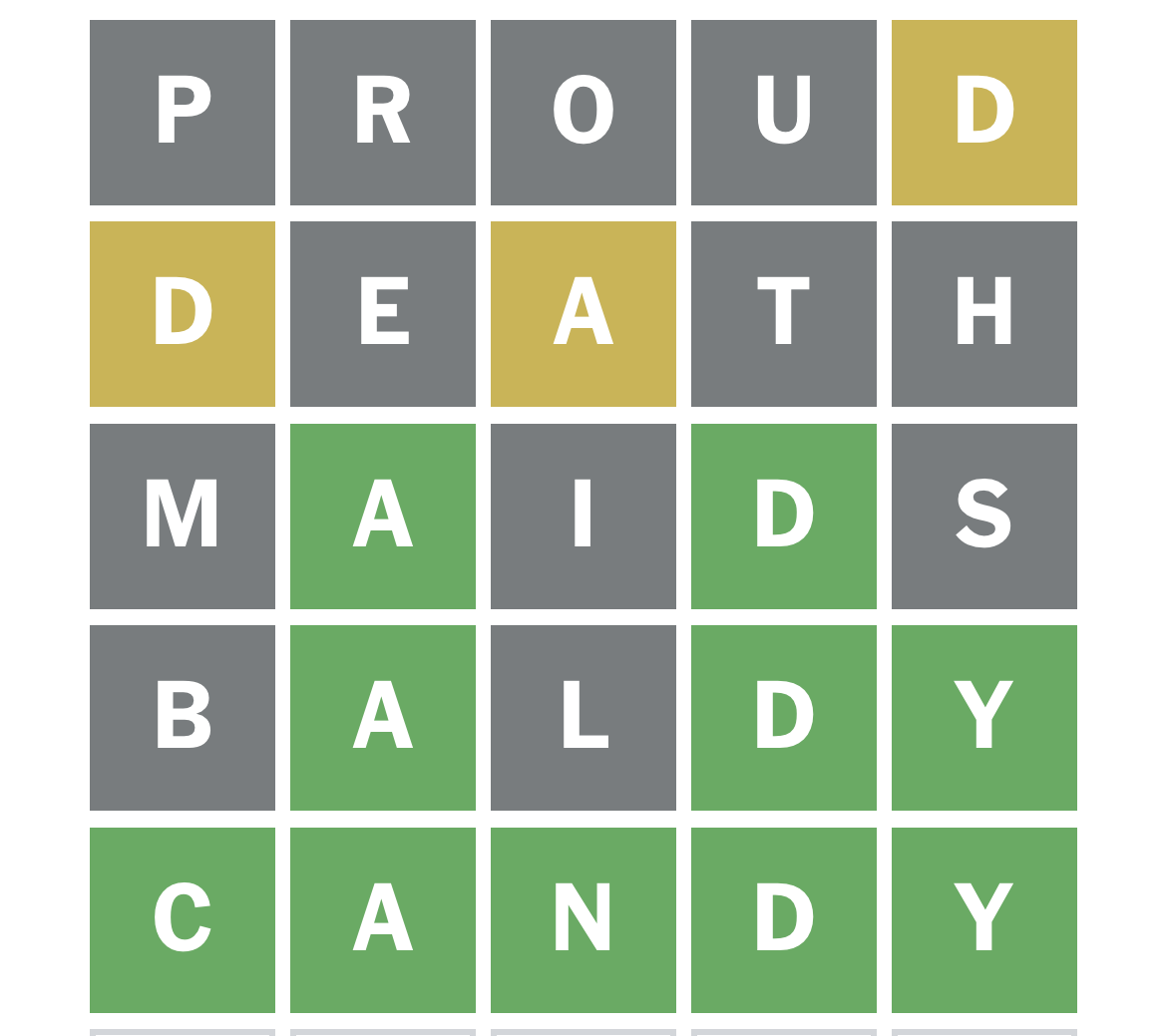
So, “proud, death, maids, baldy, candy” paints a mental picture where Valkyries reward a folicularly challenged warrior with Sour Patch Kids in the afterlife.
Aside from Bowie and cut-up, the other impulses that Wordle poetry activates comes from music. I did a talk at a thing a few years back where I prefaced the improvisatory nature of my remarks by saying I have a hip-hop brain, a jazz brain. And that’s very deeply true. To me, there’s always been a notional kinship between improvising jazz solos and recontextualing/remixing hip-hop beats. Playing with structure, syncretic fusion, outsider origins, deep preparation as a launchpad for spontaneous exploration, something out of nothing/not a lot… feels connected, don’t it? Anyway, all the things that connect the two black musical forms definitely put a few significant folds in my grey matter. Making poetry and/or story prompts out of Wordle definitely pings off that foundational elements of my being.
So, as I try to get into some kind of regular rhythm on this here Substack, expect some posts about emergent Wordle poetry.
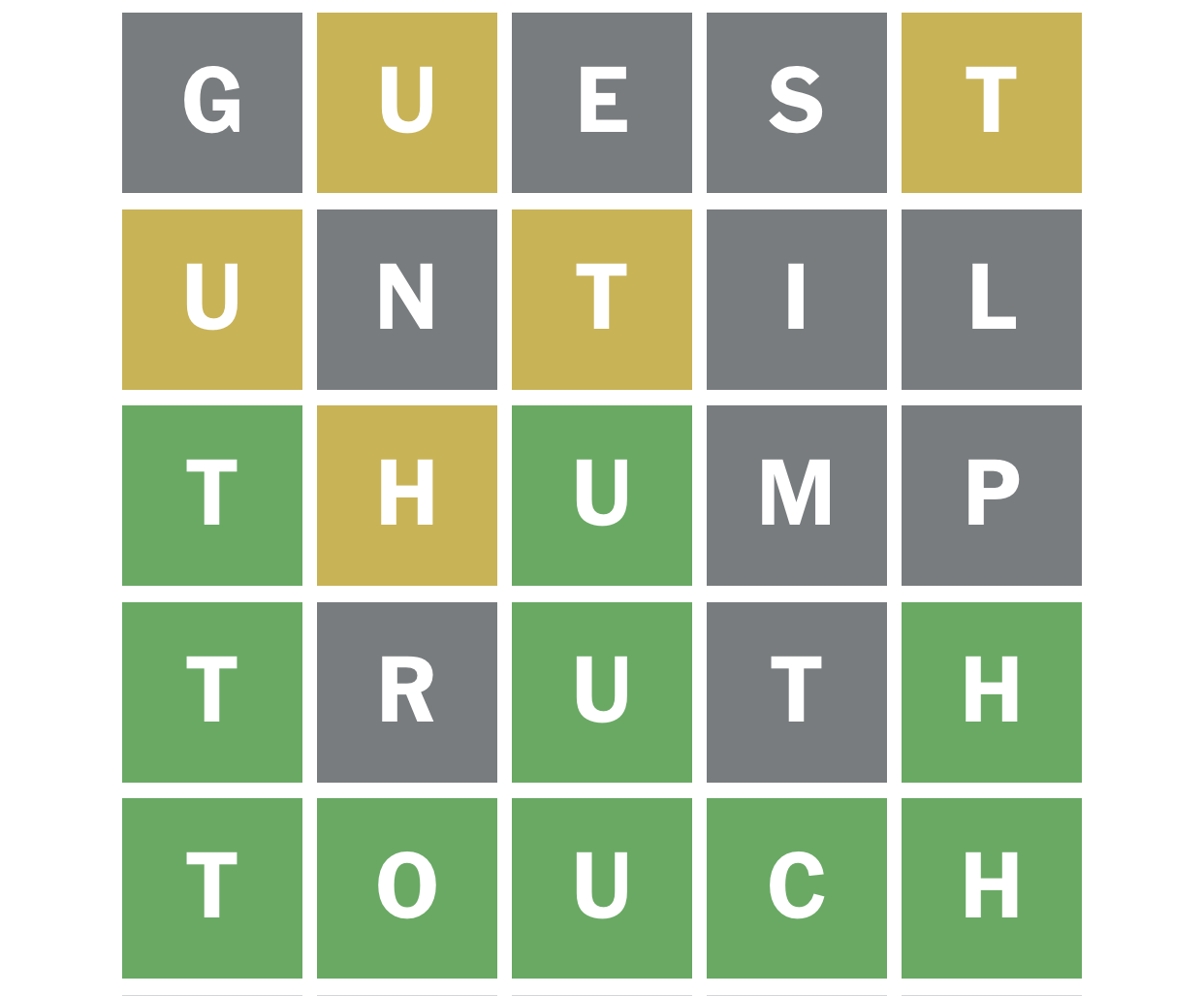
Guest until thump.
Truth, touch.
That’s a horror movie waiting to happen right there.